
Environmental baseline monitoring with eDNA sampling
What is eDNA?
As the name suggests, environmental DNA (eDNA) is DNA collected from the environment. All living organisms, including animals, plants, fungi, and microbes, constantly shed DNA into their environment through processes such as skin cells loss, waste, pollen, spores, or decaying material. These DNA pieces drift through the air and water or settle into sediments and soils. Consequently, as organisms move, grow, or decay in an area, they leave behind a unique genetic fingerprint that can be detected later, providing evidence of their presence without needing to see or capture them.
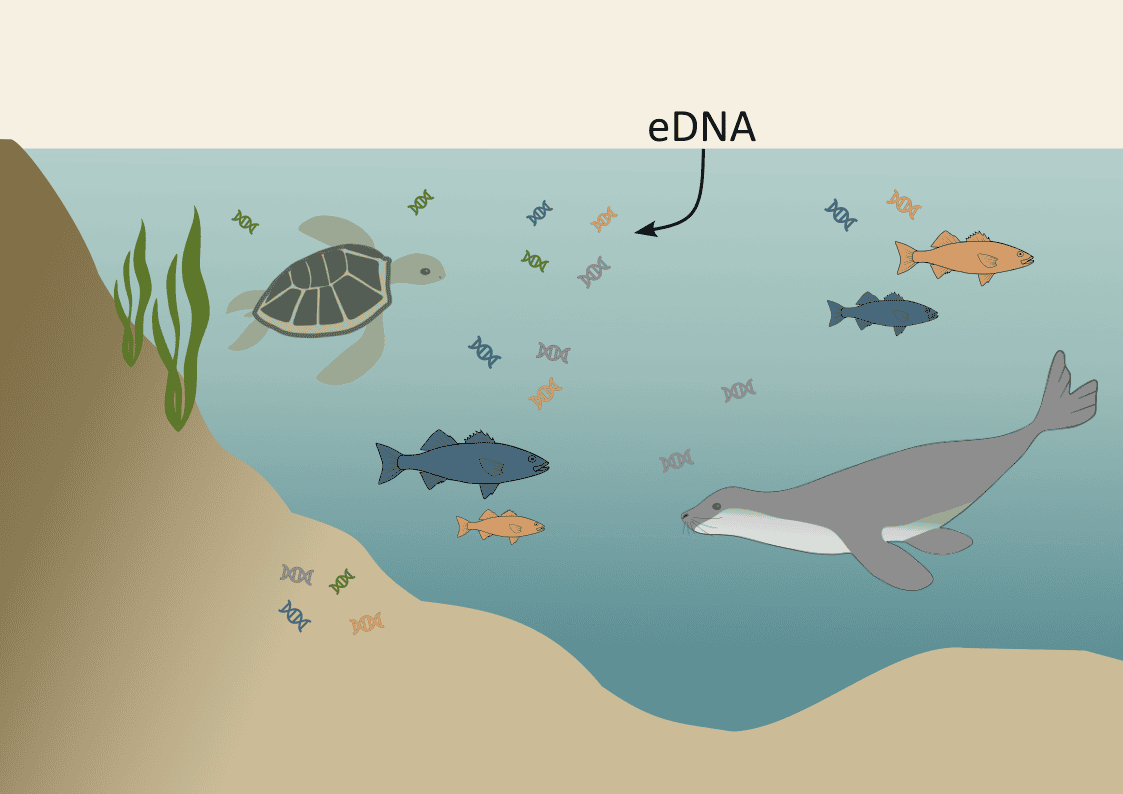
How does eDNA analyses work?
Field Work
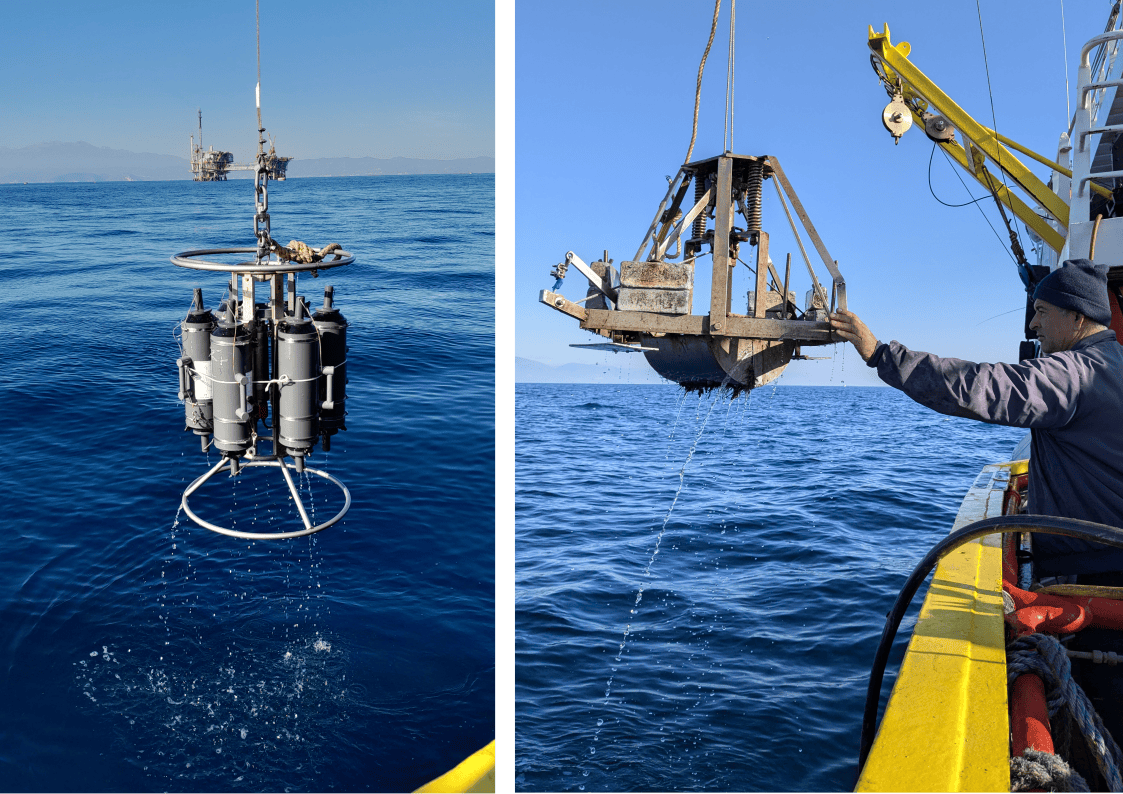
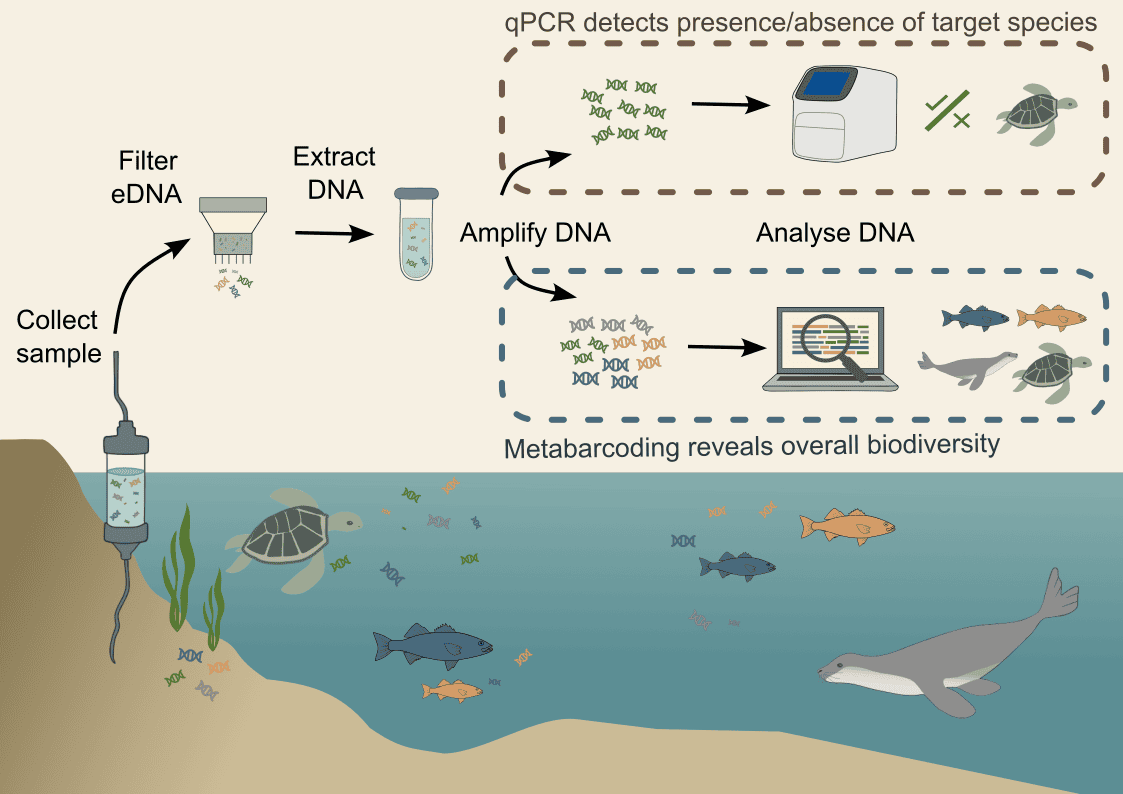
To collect eDNA, the first step is to collect samples from the environment, such as air, water, soil, or sediment, where DNA traces may be present. Collecting samples is straightforward and can be carried out by anyone following clear instructions. For example, a portable battery-powered pump can be used to collect water samples, while sediment or soil samples can simply be collected by hand. When stored in the appropriate solution, samples can be preserved for several months before the DNA is extracted.
Laboratory Analysis
Back in the laboratory, DNA is extracted from the collected samples. Scientists then use specific primers to select the DNA regions of interest. Primers act like bookmarks in a massive book: one marks the start of a section, the other marks the end. These selected DNA sections are then copied millions of times using a Polymerase Chain Reaction (PCR) machine. This process makes even the tiniest amounts of DNA in a sample detectable, allowing scientists to identify which species have been present in the sampled environment.
Sampling time and location matter for eDNA
Finding eDNA depends on how much DNA organisms release and how long they are present at a site. Over time, eDNA can be transported by water currents or broken down, meaning it eventually disappears. How long eDNA remains detectable varies with environmental conditions, sediment type, and seasonal changes. For example, sediments can help protect DNA from degradation, while warmer spring and summer conditions often increase microbial activity, causing eDNA to break down more quickly. For this reason, it is important to collect sufficiently large samples from the right locations and at the right time, as samples that are too small, scattered, or collected over a short period may miss some species.
Benefits of using eDNA
eDNA requires less time, effort, and money than traditional survey methods. Unlike traditional methods that require experts to observe and identify species directly, eDNA works by analysing environmental samples with the help of computer-based tools. This allows scientists to detect species more quickly and efficiently, while samples can also be stored for future analysis.
Key benefits of eDNA include:
- Non-invasive monitoring: Species can be studied without capturing or disturbing them.
- Detection of hard-to-find species: eDNA can reveal rare, vulnerable, or invasive species that are difficult to observe visually.
- Efficient environmental assessment: eDNA provides an overview of which species are present in an area.
- Long-term storage: Samples can be frozen and analysed later, making eDNA ideal for establishing baseline data and comparing environmental changes over time.
eDNA as baseline data in COREu
To evaluate if carbon capture and storage (CCS) activities in COREu impact animals and their environments, scientists need a reference point for comparison. This is where baseline data comes in. Baseline data describes what the environment is like before storage activities begin. It serves as a reference point that allow scientists to track changes over time, such as shifts in species presence or changes in water and soil quality.
Although most research indicates that CO₂ leakages are likely to have only minor, local and reversible environmental impacts, collecting detailed baseline data is essential to detect and assess any potential effects should they occur.
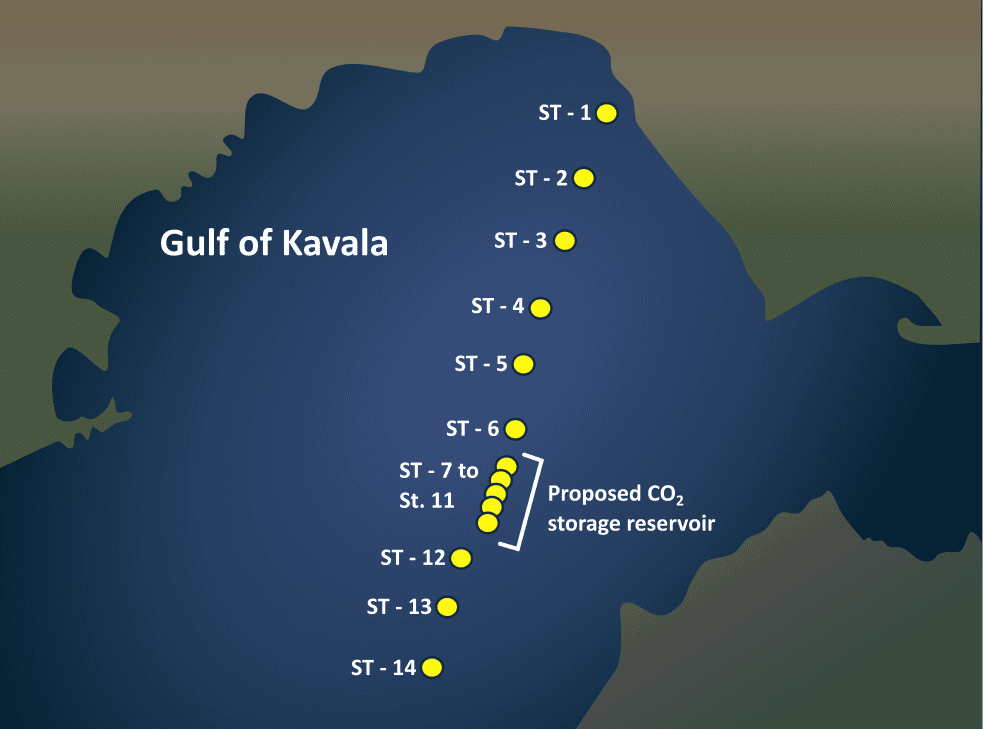
To establish a baseline for detecting any future environmental changes, COREu collected data in the Gulf of Kavala in Greece before CO₂ storage activities began. Biological data, including eDNA, and physico-chemical data from water and sediments were collected along a 22km transect line stretching from the shore to beyond the planned CO2 storage reservoir, covering different sediment types and seasons. By storing eDNA samples, the dataset remains flexible and future-proof, allowing comparisons over time and supporting long-term environmental monitoring before deep geological CO₂ storage starts.
Author
Author: Lene Klubben Sortland, Researcher at Norwegian Institute for Nature Research (NINA)