
Summer Researcher Makes CO₂ Pipeline Simulations Up to 35 Times Faster
Summer Research Accelerating CCS
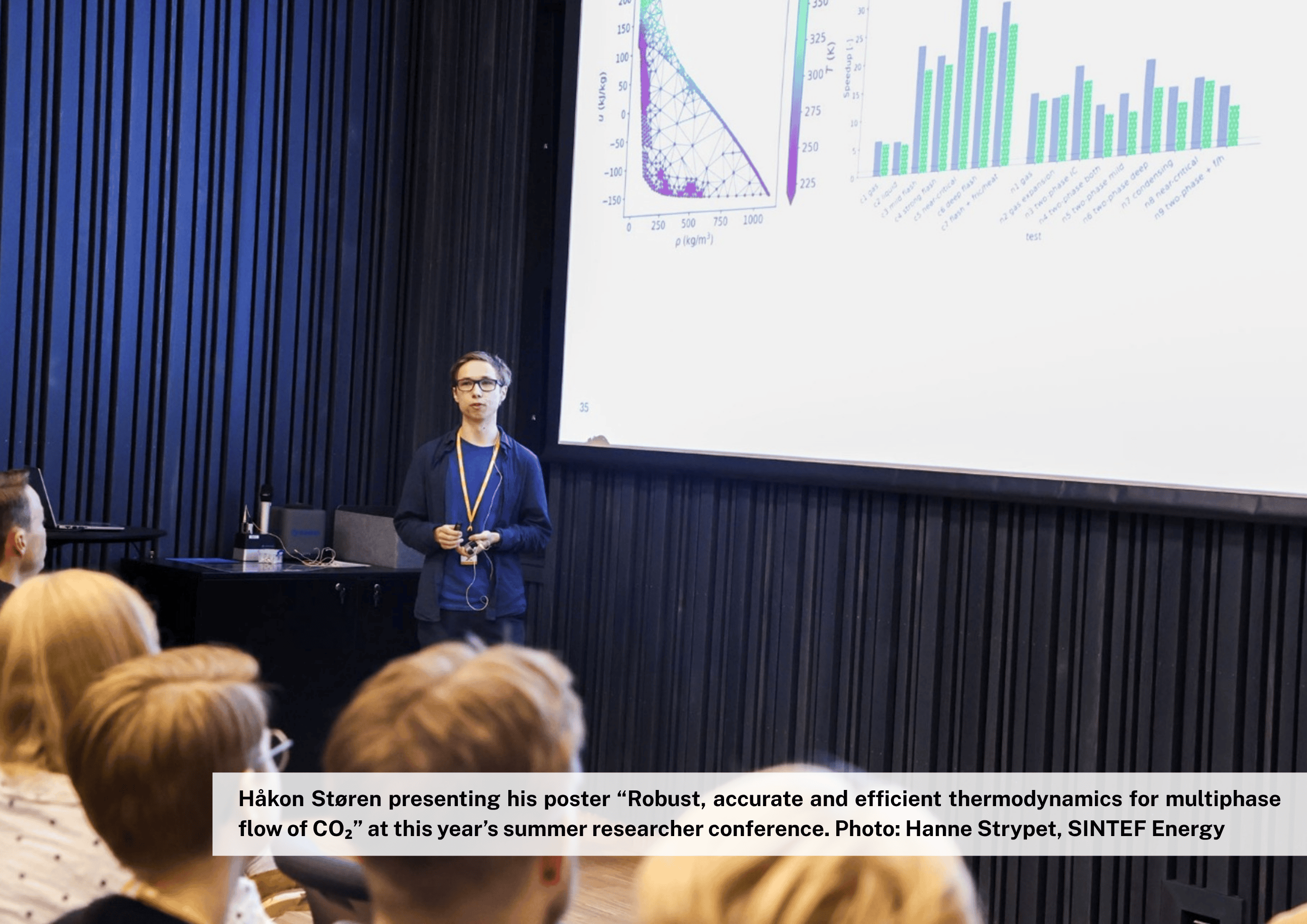
This summer, Håkon Støren, who studies Applied Physics and Mathematics at NTNU, joined COREu partners SINTEF Energy Research as a summer researcher in the COREu project. Støren worked on making computer simulations of CO₂ flow in pipelines faster, without losing accuracy. He was supervised by Alexandra Metallinou Log and Svend Tollak Munkejord.
Alexandra explains what the programme means for the team:
It is always engaging to work with summer students. They come in with open minds and a lot of curiosity about CCS. The students work through the summer on a single, focused task, directly relevant for the COREu project. This lets them complete tasks that we might not otherwise have the time to do. The summer jobs also allow the students to become familiar with CCS, educating a new generation of scientists and engineers.
About SINTEF summer researcher programme
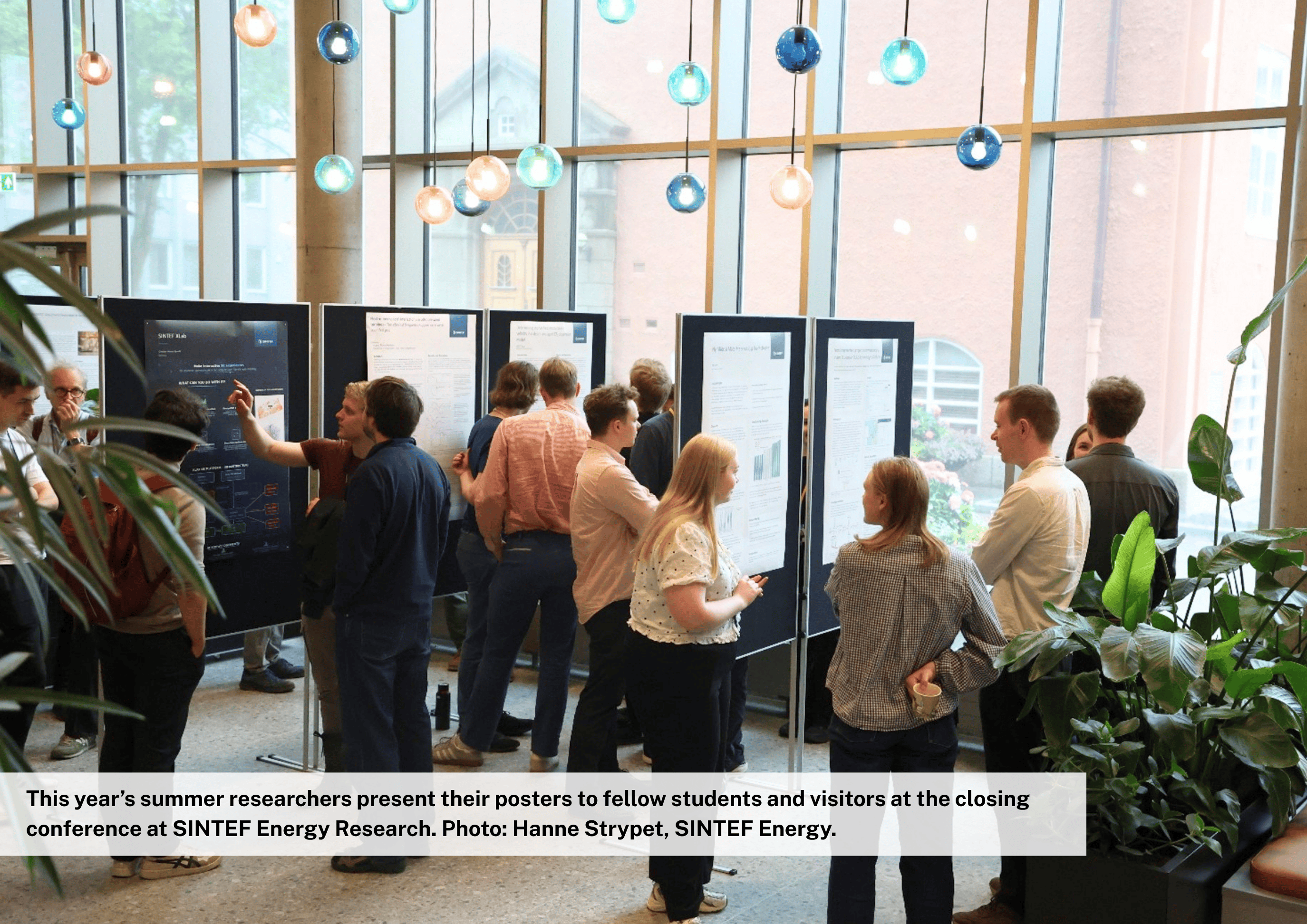
The summer researcher program at SINTEF Energy Research is a research internship for university students. Participants work on real projects alongside experienced researchers and present their results at a conference at the end of the summer. You can learn more about the program here (Norwegian only).
Why Simulate CO₂ in Pipelines?
Carbon capture and storage (CCS) is a key technology for reducing greenhouse gas emissions. The CO₂ is captured at industrial sites and must be transported to storage sites, and for large volumes over shorter distances, pipelines are the most economical option.
Inside the pipeline, the CO₂ is a liquid under high pressure. If the pressure suddenly drops, for example because a valve is opened or the pipe is damaged, the CO₂ starts to boil and becomes a mix of liquid and gas.
To understand what happens in such situations, researchers use computer simulations. These simulations are demanding, because the computer has to work out the properties of the CO₂ (such as temperature and pressure) again and again, for every small section of the pipe and every fraction of a second.
A look-up table instead of calculating every time
Calculating these properties from scratch each time is slow. A faster approach is to do the calculations once in advance and store the results in a large table, much like a multiplication table. During the simulation, the computer simply looks up the answer instead of recalculating it.
SINTEF already had tables like this, but they could fail under certain conditions. A new, more robust type of table has therefore been developed. However, SINTEF’s pipe flow simulator, CO2 Dynamics, is written in a different programming language than the new tables. Håkon’s task was to build the “bridge” between them, so that CO2 Dynamics can use the new tables in its simulations.
Simulations 5 to 35 times faster
Håkon tested the new solution on 16 different simulation cases, including pure CO₂, mixtures of CO₂ and nitrogen, and situations with both liquid and gas in the pipe. He compared it against the older tables and against the slow method of calculating everything from scratch.
• Using tables made the simulations 5 to 35 times faster, depending on the case.
• The new tables were about as fast as the old ones.
• The new tables were more accurate than the old ones in almost every case.
In other words, CO2 Dynamics can now run faster simulations of CO₂ flow with good accuracy. This makes it easier to study how CO₂ pipelines behave in demanding situations, which supports the safe design of the transport systems needed for CCS.